
A packaging redesign solved a patient compliance problem and increased revenue by 35%.
A health company was losing revenue because patients weren't returning their STI test kits
A health company partnered with an American Midwestern state to provide at-home STI testing kits. Payment from the state was contingent on returned samples. Roughly 80% of patients never sent back their samples, costing revenue and leaving infections undetected in the community.
Approach
Our researcher designed the study, but execution fell to the client's warehouse staff, not a dedicated research team. The study was built around their existing workflow, using low-cost stickers that the staff applied manually, with no extra headcount and almost no added time.
Used journey mapping and behavioural models to identify where and why patients abandoned the return process
Hypothesis: branded packaging compromised patient privacy by signalling sensitive health information. Unbranded boxes would keep the patients more anonymous and remove a key barrier to returning samples
A/B experiment to test the impact of unbranded packaging on return rates
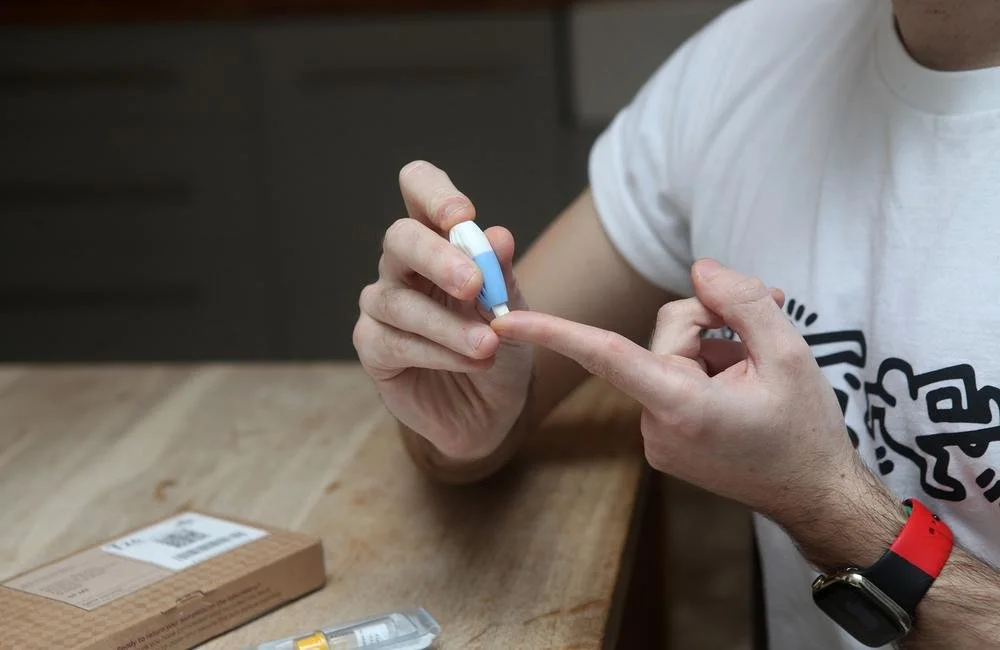
Conducted a separate A/B test on blood collection instructions and instruments to identify usability barriers
What the data showed
+35%
increase in sample returns after removing branding.
+35%
increase in revenue — directly tied to return rates.
0.5–5
fewer new STI cases per treated individual.
Outcome
Packaging redesign: As results showed a 35% lift in returns and revenue, the company switched to unbranded packaging. A low-cost change with direct commercial and public health impact.
Usability fix: Confusing instructions made sample collection difficult. When results were shared with the company, they revealed that 1 in 10 returned samples contained insufficient blood to test. This wasted resources and put patients through an unpleasant experience twice. It was a problem hiding in plain sight. With this issue now identified, the company updated both the instructions and instruments to eliminate it.